
Essential Small Pet Enrichment: Keeping Rabbits and Guinea Pigs Active
Rabbits and guinea pigs are curious, social animals that need more than food and water to truly thrive. Without regular mental and physical stimulation, they develop boredom-related behaviors like fur chewing, bar biting, and lethargy. This guide covers the most effective small pet enrichment strategies for both species — practical ideas you can start today, from DIY foraging setups to habitat upgrades that make a real difference.
Key Takeaways
- Rabbits and guinea pigs need daily enrichment to support physical health and prevent stress behaviors.
- Foraging activities tap into natural instincts and are among the most effective enrichment tools for both species.
- Social interaction — with humans or same-species companions — is a core enrichment need, not a bonus.
- Rotating toys and activities keeps environments feeling fresh without requiring constant spending.
- Safe chew materials are essential for dental health in both rabbits and guinea pigs.
- Environmental design (tunnels, hides, multi-level spaces) matters as much as toys and activities.
Why Small Pet Enrichment Is Non-Negotiable
Rabbits and guinea pigs evolved as prey animals in complex, stimulating environments, which means a bare cage with food and water leaves significant behavioral needs unmet. In the wild, rabbits spend up to six hours a day foraging and exploring. Guinea pigs, native to South American grasslands, live in social groups and navigate varied terrain daily. Replicating even a fraction of that complexity in a home setting dramatically improves their physical health and emotional wellbeing.
Signs that your small pet is under-stimulated include repetitive behaviors (like running the same circuit in their enclosure), over-grooming, aggression, or unusual weight changes. If you're seeing any of these, enrichment is your first line of action.
Foraging: The Single Most Effective Enrichment Strategy
Foraging enrichment engages the natural food-seeking behavior of both rabbits and guinea pigs, reducing stress and increasing daily activity. Instead of placing pellets or hay directly in a bowl, try these approaches:
- Scatter feeding: Spread leafy greens or pellets across hay so your pet has to root through the pile to find them.
- Foraging boxes: Fill a shallow cardboard tray with shredded paper, hay, and hidden treats like dried herbs or small pieces of bell pepper.
- Paper bag bundles: Stuff a small paper bag with hay and a treat, fold the top closed, and let your rabbit or guinea pig tear into it.
- Hanging herb bundles: Tie fresh parsley, cilantro, or dill to the side of the enclosure so they have to stretch and tug to eat.
Rotate these setups every few days. Novelty is what keeps foraging effective — once an animal learns exactly where to look, the challenge disappears.
Chewing: Enrichment That Also Protects Dental Health
Both rabbits and guinea pigs have teeth that grow continuously throughout their lives, making appropriate chewing materials a health necessity, not just entertainment. Safe chew options include untreated willow, apple wood sticks, hay cubes, and seagrass mats. Avoid anything painted, chemically treated, or made from cedar or pine, which contain compounds that can cause liver damage.
Beyond dental benefits, chewing satisfies an instinctual drive. Provide a variety of textures — rough wood, compressed hay, woven grass — and swap items out regularly. You'll notice your pet showing clear preferences over time, which tells you a lot about what they enjoy.
Habitat Design: Building a Stimulating Space
A well-designed enclosure is a foundation for all other enrichment efforts. Rabbits need a minimum of 12 square feet of living space (more is always better), while guinea pigs require at least 7.5 square feet for a single pig, with more for pairs. Within that space, structure matters:
Tunnels and Hides
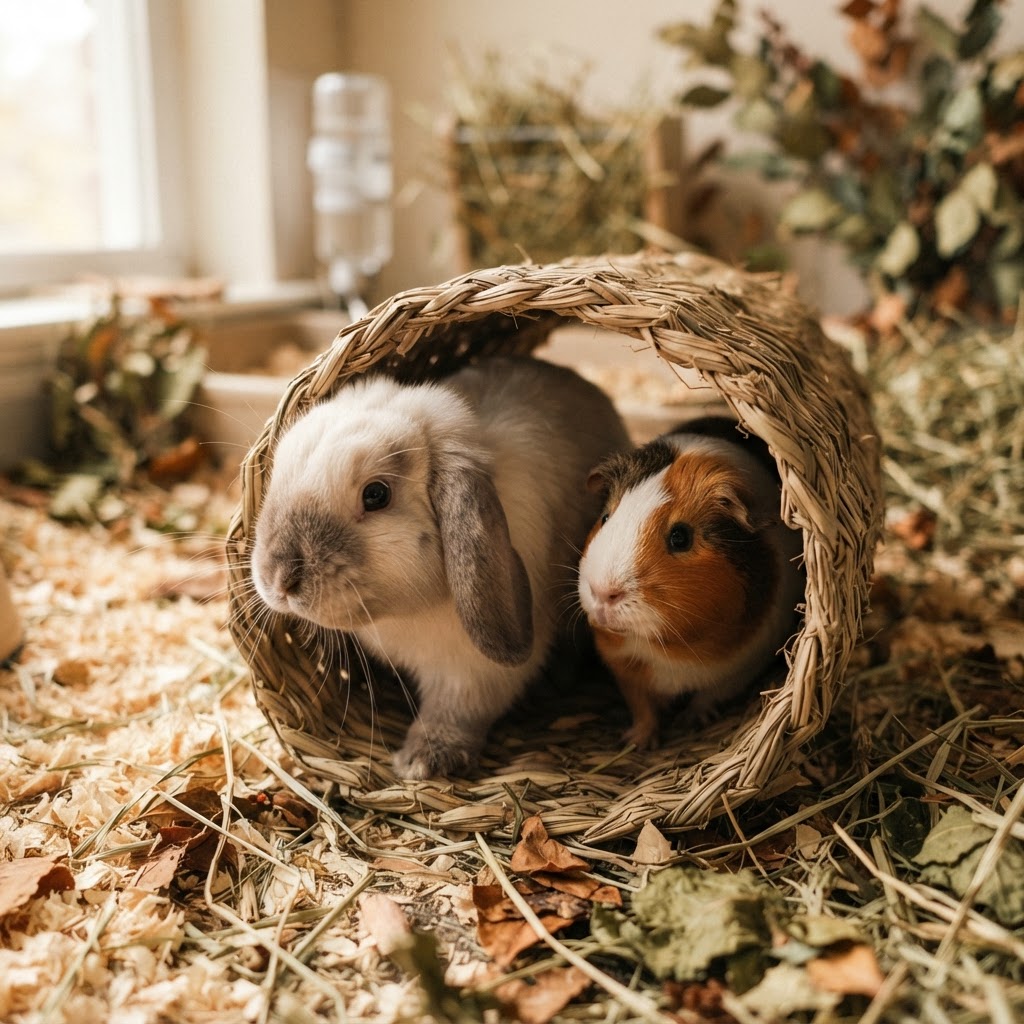
Prey animals feel safest when they can move through covered spaces and retreat when stressed. Cardboard boxes with holes cut in two sides make excellent tunnels. Fabric hides, wicker baskets, and wooden houses all work well. Always provide at least two exit points so your pet never feels cornered.
Levels and Platforms
Rabbits benefit from low platforms (4–6 inches off the ground) that let them survey their environment from a slightly elevated position. Guinea pigs generally stay ground-level but appreciate ramps and varied terrain within their space. Avoid steep drops for guinea pigs, as they are prone to leg injuries from falls.
Sensory Variety
Add different flooring textures — a section of fleece, a sisal mat, a tile patch for warm months — so your pet experiences tactile variety throughout the day. This simple addition encourages exploration without requiring constant supervision.
For more habitat guidance, visit our small pet care resource hub for species-specific setup checklists and vet-approved recommendations.
Social Enrichment: The Overlooked Essential
Guinea pigs are obligate social animals — keeping a single guinea pig without significant daily human interaction leads to chronic stress, and most welfare organizations strongly recommend keeping them in same-sex pairs or small groups. Rabbits also benefit greatly from companionship, either from a bonded rabbit partner or consistent daily interaction with their owner.
Hands-on time counts as enrichment. Floor time outside the enclosure, gentle grooming sessions, and simple training (yes, rabbits learn their names and basic cues) all stimulate your pet mentally and build trust.
DIY Enrichment Ideas You Can Make Today
- Toilet paper roll stuffed with hay and dried flowers: Free and takes two minutes to assemble.
- Egg carton forager: Fill the cups with small treat pieces and fold it closed.
- Herb garden pot: Plant a small container of safe herbs (basil, cilantro, mint) and let your pet nibble directly.
- Cardboard castle: Stack and tape cardboard boxes into a multi-room structure. Rebuild it differently each month.
Browse the Simply Petastic marketplace for ready-made foraging toys, chew bundles, and habitat accessories from small-pet-focused vendors.
Frequently Asked Questions
How much enrichment time do rabbits and guinea pigs need each day? Both species benefit from at least one to two hours of active enrichment time daily, plus a continuously stimulating environment throughout the day. Passive enrichment — foraging setups, chews, and varied habitat design — works in the background so you're not the sole source of stimulation.
Can I use dog or cat toys for rabbits and guinea pigs? Some cat toys like crinkle balls and small woven balls are safe, but always check materials carefully. Avoid anything with small parts that could be swallowed, rubber components, or catnip, which has no place in a rabbit or guinea pig's environment.
How do I know if an enrichment activity is working? Look for engagement: your pet actively investigating, manipulating, or returning to the item repeatedly. Reduced repetitive behaviors and more relaxed body language (flopped postures in rabbits, relaxed "popcorning" in guinea pigs) are also positive signs.
Are store-bought enrichment toys worth it? Quality commercial toys designed specifically for small pets are often worth the investment for durability and safety assurance. DIY options are excellent supplements, but purpose-built foraging toys tend to be more engaging because they're designed with species behavior in mind.
My guinea pig ignores most toys. What should I try? Guinea pigs tend to respond most strongly to food-based enrichment. Start with foraging setups using their favorite vegetables rather than abstract toys. Once they're consistently engaging with food-based activities, you can introduce other items gradually.
Can rabbits and guinea pigs share enrichment items? They should not be housed together, but items like willow chews and hay-based foragers are safe for both species. Just don't share items that have been in contact with a sick animal, and always supervise any mixed-species interaction time.
Whether you're setting up your first rabbit habitat or refreshing a guinea pig enclosure that's gone stale, small pet enrichment is one of the highest-impact things you can do for your animal's quality of life. Head over to our small pet care guides for detailed species profiles, or check out our healthy treat recipes to level up your foraging setups with homemade options your pets will love.

