
Essential Parrot Nutrition: Building the Perfect Daily Chop
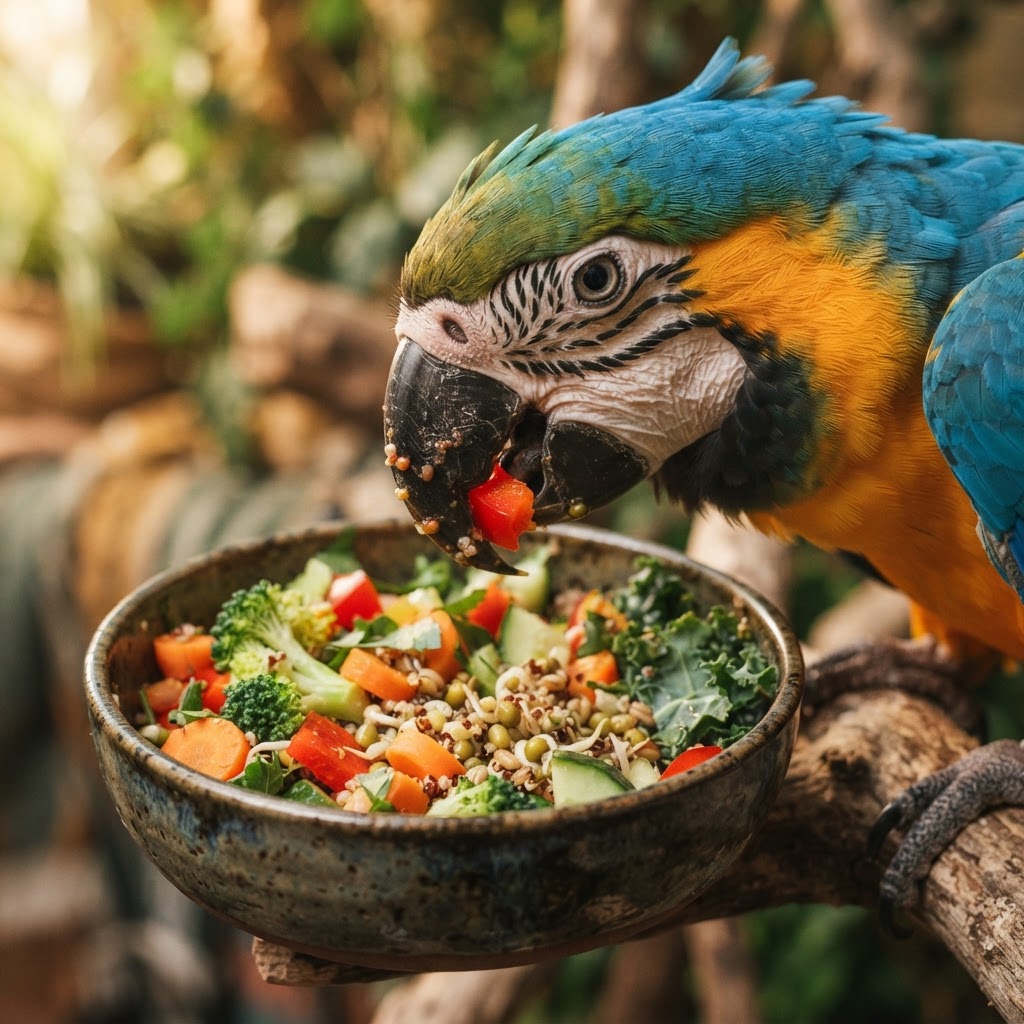
If your parrot is flinging pellets off the cage bars and ignoring store-bought seed mixes, you are not alone — and the fix is simpler than you think. This guide breaks down exactly what goes into a nutritionally balanced daily chop, which ingredients to avoid, and how to build a routine your bird will actually embrace. Get ready to transform mealtime from a battle into a highlight of your parrot's day.
Key takeaways
- Chop is a finely chopped, mixed fresh food blend that covers the vegetable, grain, and legume pillars of parrot nutrition
- Leafy greens, colorful vegetables, cooked whole grains, and sprouted legumes form the core of any well-built chop
- Avocado, onion, chocolate, and fruit seeds are toxic to parrots and must never appear in chop
- Chop can be batch-cooked weekly, portioned, and frozen — saving time without sacrificing freshness
- Pellets should still make up roughly 50–60% of a companion parrot's diet; chop supplements rather than replaces them
- Rotating ingredients seasonally keeps your bird mentally stimulated and nutritionally covered
Why parrot nutrition goes beyond seeds
A seed-only diet delivers excess fat and falls critically short on vitamins A, D3, calcium, and essential amino acids — deficiencies that veterinarians link directly to shortened lifespans in companion parrots. Wild parrots forage across dozens of plant species daily, eating immature seeds, bark, flowers, fruit pulp, insects, and mineral-rich clay. Replicating that variety at home is the single most impactful thing you can do for your bird's long-term health.
Daily chop is the practical answer. It meets your parrot where it is: colorful, texturally interesting, and packed with the micronutrients that pellets alone can't fully deliver in bioavailable form.
The four pillars of a balanced chop
1. Leafy greens — the nutritional backbone
Leafy greens are the most nutrient-dense component of any parrot chop and should make up 40–50% of the total volume. Top picks include:
- Kale — high in vitamins A, C, and K
- Swiss chard — iron, magnesium, and potassium
- Dandelion greens — calcium and liver-supportive compounds
- Arugula — antioxidants and folate
- Collard greens — calcium that rivals dairy
Rotate your greens weekly. Overusing one type (especially spinach, which is high in oxalic acid) can interfere with calcium absorption over time.
2. Colorful vegetables — antioxidants and variety
Brightly colored vegetables supply beta-carotene, lycopene, and flavonoids that support immune function and feather health. Aim for at least three colors per batch:
- Red and orange bell peppers — vitamin C and carotenoids without the capsaicin heat
- Carrots (grated or finely chopped) — beta-carotene
- Beets — folate and natural pigments birds find visually stimulating
- Broccoli florets — vitamin C and calcium
- Zucchini — hydration and easy digestibility
3. Cooked whole grains — slow-burning energy
Cooked whole grains provide complex carbohydrates and B vitamins that keep energy levels stable between meals. Good options include quinoa (a complete protein), brown rice, barley, and whole-wheat pasta. Keep grain portions modest — roughly 15–20% of total chop volume — to avoid displacing higher-nutrient ingredients.
4. Sprouted legumes — protein and enzymes
Sprouted lentils, chickpeas, and mung beans deliver plant protein, enzymes, and minerals in a highly digestible form. Sprouting deactivates antinutrients like phytic acid, making this the safest way to incorporate legumes. Never feed dry, raw, or fermented legumes, which can harbor harmful bacteria or compounds.
Ingredients to keep out of the bowl
Parrot nutrition requires strict attention to what stays off the cutting board. The following are definitively toxic:
- Avocado — persin causes cardiac distress and can be fatal within 24–48 hours
- Onion and garlic — thiosulfates damage red blood cells
- Apple, cherry, peach, and apricot seeds — contain cyanogenic compounds
- Chocolate and caffeine — affect the nervous system and heart rate
- Rhubarb — oxalic acid in dangerous concentrations
- Mushrooms — risk of toxicity varies and is difficult to assess; avoid entirely
Building your weekly batch routine
Batch-prepping chop once a week is the practical approach most parrot owners sustain long-term. A consistent routine looks like this:
- Wash and dry all produce thoroughly — moisture accelerates spoilage
- Chop everything finely, roughly ¼-inch pieces or smaller for smaller species like cockatiels and conures
- Cook grains separately, cool completely, then fold into the vegetable mix
- Portion into daily servings using silicone ice-cube trays or small freezer-safe containers
- Freeze all but the next two days' worth; refrigerated chop stays fresh 48 hours
For batch-prep inspiration and parrot-safe recipes your bird can look forward to, explore the parrot-friendly recipes on Simply Petastic — the collection includes seasonal rotations that align with peak produce availability.
Introducing chop to a reluctant bird
Dietary conservatism is hardwired into parrots as a survival trait — unfamiliar food signals potential danger. Introduce chop gradually by placing it directly on top of your bird's current food, so it has to move the chop to get to what it already trusts. Foraging toys stuffed with chop ingredients also reframe food as play.
Most birds accept chop within two to four weeks of consistent exposure. Some take longer. Patience is not optional here — it is the strategy.
For step-by-step guidance on building healthy habits across your bird's life stages, the parrot care guides at Simply Petastic cover everything from fledgling nutrition to senior bird adjustments.
Frequently Asked Questions
How much chop should I feed my parrot daily? A general guideline is one to two tablespoons of chop per 100 grams of body weight, served in the morning when parrots are most motivated to eat. Adjust based on how much your bird actually consumes rather than how much you offer.
Can I add fruit to chop? Yes, small amounts of bird-safe fruit — such as blueberries, mango, papaya, and pomegranate seeds — are excellent additions. Keep fruit to 10% or less of total chop volume to avoid excess natural sugar, which can disrupt gut bacteria over time.
Do I still need pellets if I'm feeding daily chop? Pellets remain important and should make up the majority of a companion parrot's diet, roughly 50–60%. Chop fills nutritional gaps that pellets leave, particularly in bioavailable phytonutrients, hydration, and foraging enrichment.
Is frozen chop as nutritious as fresh? Blanching before freezing causes modest nutrient loss, but freezing without blanching preserves most vitamins well. The convenience of frozen chop means birds eat varied whole foods every day instead of seeds — a significant net gain.
What size should I chop ingredients for smaller birds like cockatiels? For birds under 100 grams, aim for pieces no larger than ⅛ inch. Smaller pieces reduce the intimidation factor and make it easier for small beaks to grab and manipulate food confidently.
Can I use store-bought frozen vegetables in chop? Plain frozen vegetables with no added salt, sauce, or seasoning are generally safe and nutritionally comparable to fresh. Thaw, drain excess moisture, and fold them into your chop mix as you would fresh-chopped produce.
Ready to put this into practice? Browse the bird-safe recipe collection at Simply Petastic for ready-to-use chop formulas, or head to our bird care hub for a full feeding schedule you can start using today. Your parrot's best meals are a cutting board away.

