

How Often Should You Groom a Cat? A Coat-Type Guide
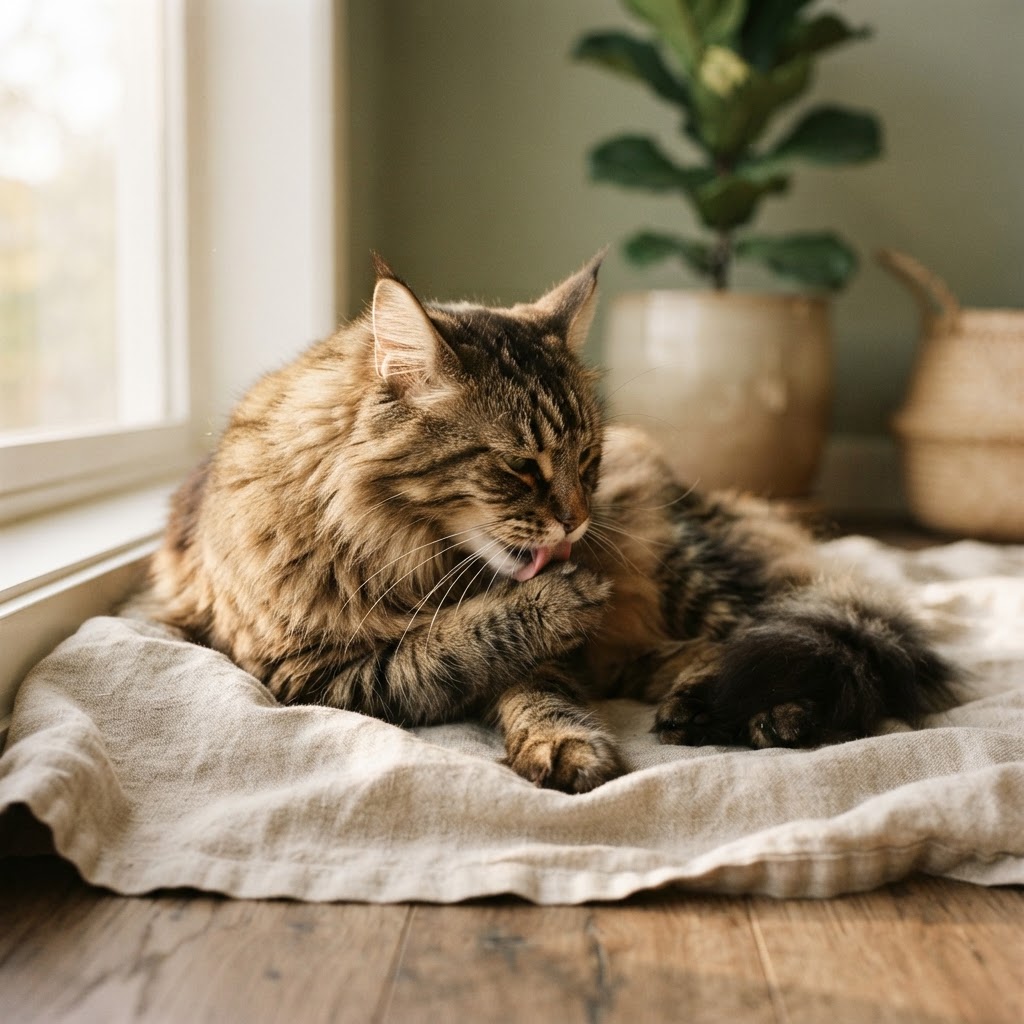
Most cat owners underestimate how much grooming their cat actually needs — and the answer isn't the same for every feline. Whether you share your home with a sleek Siamese or a cloud-soft Maine Coon, your cat's coat type is the single most reliable guide to how often grooming should happen. This article gives you a clear, breed-informed schedule you can actually follow.
Key Takeaways
- Grooming frequency depends primarily on coat length, texture, and density — not breed alone.
- Short-haired cats generally need brushing once a week; long-haired cats need it three to five times per week.
- Double-coated breeds (cats with a dense undercoat beneath the topcoat) require more frequent sessions to prevent matting.
- All cats benefit from routine nail trims every two to three weeks and periodic ear checks.
- Bathing is rarely necessary for healthy cats but may be warranted for hairless breeds or cats with skin conditions.
- A consistent grooming routine established in kittenhood is easier to maintain throughout a cat's life.
Why Coat Type Is the Real Answer to How Often You Should Groom a Cat
Coat type — defined by length, texture, and the presence or absence of an undercoat — determines how quickly fur mats, how much a cat sheds, and how much help a cat needs beyond its own self-grooming. Cats are meticulous self-groomers, spending up to 50 percent of their waking hours on coat maintenance, but that self-care has real limits. Long, dense, or fine-textured fur can tangle faster than any cat can manage alone, and swallowed fur leads to hairballs that affect digestive comfort.
Understanding your cat's coat category before building a routine saves you time and protects your cat from the discomfort of matted fur or over-grooming stress.
Short-Haired Cats: Once a Week Is Usually Enough
Short-haired cats — including the American Shorthair, Abyssinian, Russian Blue, and Bengal — have a single layer of close-lying fur that rarely mats and sheds in modest amounts. A weekly brushing session with a soft-bristle brush or grooming glove is typically sufficient to remove loose fur, distribute natural skin oils, and reduce the amount of hair your cat ingests during self-grooming.
Tools for Short Coats
A rubber grooming glove or a fine-tooth comb works well for most short coats. Avoid slicker brushes with stiff wire pins on short-haired cats — they provide more stimulation than these coats require and can irritate sensitive skin.
Weekly grooming sessions also double as a hands-on health check. Run your fingers along the spine, belly, and behind the ears to feel for lumps, scabs, or signs of fleas. Early detection matters.
Medium-Haired Cats: Two to Three Times per Week
Medium-haired cats — such as the Maine Coon (in its denser-coated relatives), Ragdoll, and Turkish Angora — carry fur that falls between sleek and luxurious. These coats are prone to feathering (longer fur around the ruff, belly, and tail), which tangles more readily than the main body coat.
Brush medium-haired cats two to three times per week, paying close attention to friction points: under the arms, behind the ears, and at the base of the tail. A stainless steel wide-tooth comb followed by a slicker brush works well for these coats. Work slowly — rushing pulls at the skin and erodes your cat's trust in the process.
Long-Haired Cats: Three to Five Times per Week
Long-haired cats — including the Persian, Himalayan, Norwegian Forest Cat, and Birman — have dense, flowing coats that mat quickly without regular intervention. Matting (the formation of tight, tangled clumps of fur close to the skin) restricts circulation, traps moisture and debris, and causes real discomfort.
Building a Daily Habit for Long Coats
For the densest long-haired breeds like the Persian, daily brushing is the gold standard. Use a wide-tooth comb first to gently work through any tangles before they tighten, then follow with a slicker brush to smooth the topcoat. A detangling spray formulated for cats — free from alcohol, artificial fragrance, and essential oils — can ease comb-through on stubborn sections.
If a mat has already formed and cannot be gently worked apart with a comb, do not cut it yourself with scissors. Schedule a visit with a professional groomer or your veterinarian to have it safely removed.
Double-Coated Breeds: Extra Attention in Shedding Season
Double-coated breeds — cats with a soft, insulating undercoat beneath a longer, protective topcoat — include the Siberian, British Shorthair, and Norwegian Forest Cat. The undercoat sheds heavily in spring and fall during a process called blowing coat, when old undercoat releases in large quantities to make way for seasonal regrowth.
During these periods, increase brushing frequency and add an undercoat-specific tool such as a de-shedding rake to your routine. Daily sessions during peak shedding prevent loose undercoat from matting against the skin or overwhelming your cat's self-grooming capacity.
Hairless Cats: Grooming Without Fur
Hairless cats — most notably the Sphynx and Peterbald — require skin care rather than coat care. Without fur to absorb natural skin oils (sebum), these oils accumulate on the skin's surface and in skin folds, requiring a gentle warm-water bath approximately once a week. Use a fragrance-free, hypoallergenic cat-safe shampoo.
Pay special attention to the ears, which collect wax and debris more readily without the hair barrier present in other breeds.
Universal Grooming Tasks Every Cat Needs
Regardless of coat type, all cats benefit from:
- Nail trims every two to three weeks to prevent overgrowth and snagging.
- Ear checks weekly; clean only when wax or debris is visible, using a veterinarian-approved ear cleanser.
- Dental care — daily tooth brushing with cat-safe enzymatic toothpaste is the veterinary gold standard, with dental treats or water additives as a secondary option.
Frequently Asked Questions
How often should you groom a cat with no obvious tangles? Even if your cat's coat looks tangle-free, regular brushing removes loose fur, reduces hairball formation, and supports skin health through oil distribution. Stick to the schedule appropriate for your cat's coat type — short-haired cats weekly, longer coats more frequently — regardless of visible condition.
Can I over-groom my cat? Over-grooming is most often a behavioral issue in cats — a stress response or sign of skin irritation — rather than something caused by brushing too frequently. That said, aggressive brushing with inappropriate tools can cause brush burn. Use the right tool for the coat type and keep sessions gentle.
At what age should I start grooming my cat? Begin gentle grooming as early as eight to twelve weeks of age. Early exposure to brushing, nail trims, and handling makes cats significantly more cooperative throughout their lives.
Do indoor cats need grooming as often as outdoor cats? Indoor cats do not self-clean against rough outdoor surfaces and often shed year-round due to consistent indoor lighting and temperature. They may actually require more consistent brushing than some outdoor cats to manage loose fur accumulation.
Is professional grooming necessary for cats? Professional grooming — performed by a groomer experienced with cats specifically — is valuable for long-haired breeds, cats with existing mats, or cats undergoing a lion cut (a close-shaved trim used to manage severely matted coats). Most short to medium coat cats can be maintained with at-home care.
What should I do if my cat refuses grooming? Start with very short sessions — two to three minutes — using a grooming glove, which feels closer to petting. Pair each session with a high-value reward immediately afterward. If anxiety is significant, a veterinarian or certified animal behaviorist can suggest a gradual desensitization protocol.
Build a Routine That Works for Both of You
Grooming your cat on the right schedule isn't about perfection — it's about consistency and a calm environment that makes the experience comfortable for your cat over time. The right tools and a schedule matched to your cat's actual coat needs make the difference between a stressful struggle and a bonding ritual.
For more coat-specific guidance and vet-informed cat care tips, explore the Simply Petastic care network — a curated directory of local veterinarians and groomers who understand feline-specific needs. And if you're looking for ways to support your cat's skin and coat from the inside out, our healthy pet recipe library includes vet-reviewed meal and treat ideas formulated with coat-supportive ingredients like omega-3-rich proteins and hydrating whole foods.
Your cat's coat tells you a lot. Learning to listen makes all the difference.

