

Essential Aquarium Water Maintenance for Beginners
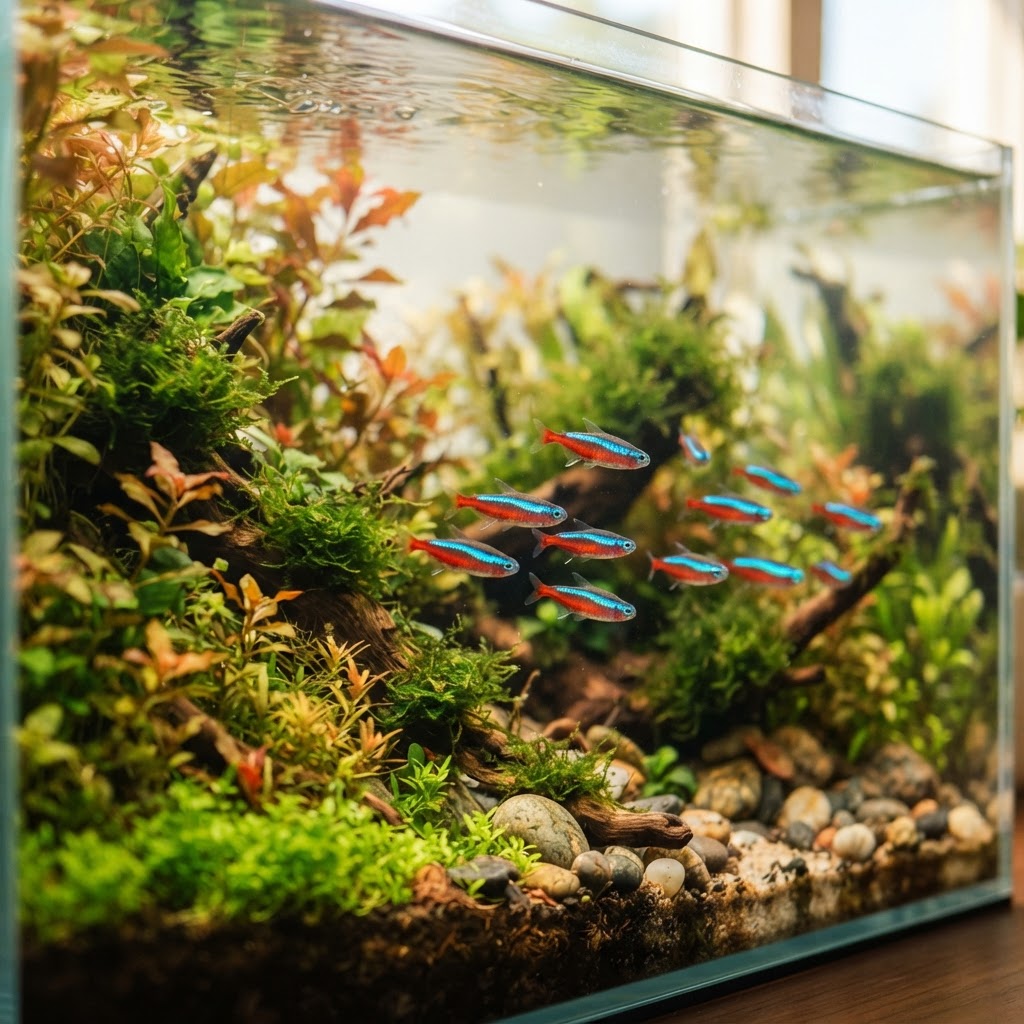
Keeping your aquarium water clean and balanced is the single most important thing you can do for your fish. This guide walks you through the core practices of aquarium water maintenance — from understanding the nitrogen cycle to performing reliable water changes — so your tank stays healthy, your fish stay active, and you stop second-guessing every cloudy patch or mysterious fish loss.
Key takeaways
- The nitrogen cycle converts toxic ammonia into less harmful nitrate through beneficial bacteria — understanding it is the foundation of aquarium water maintenance.
- Test your water parameters at least once a week using a liquid test kit, not strip tests.
- Perform partial water changes of 25–30% every 7–14 days for most freshwater community tanks.
- Match the temperature and dechlorinate replacement water before adding it to the tank.
- Algae growth, cloudy water, and lethargic fish are early warning signs that water quality has slipped.
- Gravel vacuuming during water changes removes decomposing waste that skews ammonia and nitrate readings.
Why Water Quality Is Everything in an Aquarium
Fish live, breathe, eat, and excrete entirely within the same body of water, making stable water chemistry a non-negotiable part of their survival. Unlike a pond with natural filtration and dilution, a closed aquarium accumulates waste quickly. Ammonia from fish waste and uneaten food spikes fast in small volumes, and even low concentrations — as little as 0.25 ppm — can cause gill damage and immune suppression in common species like guppies, tetras, and bettas.
The good news is that once you establish a routine, aquarium water maintenance takes less than 30 minutes a week for most tanks under 55 gallons.
Understanding the Nitrogen Cycle First
The nitrogen cycle is the biological process by which ammonia (from fish waste) is converted by bacteria into nitrite and then into nitrate, which is far less toxic. New aquarium owners often lose fish not from disease but from "new tank syndrome" — a spike in ammonia and nitrite before beneficial bacteria colonies are established. This cycling process typically takes 4–6 weeks in a new tank.
To speed it up:
- Use a bacterial starter product like Fritz Zyme 7 or Seachem Stability
- Add a small amount of gravel or filter media from an established tank
- Feed lightly or not at all during cycling — uneaten food drives ammonia sky-high
You can track cycling progress by testing ammonia, nitrite, and nitrate every two days. Once ammonia and nitrite both read 0 ppm and nitrate is detectable, your cycle is complete and it's safe to stock fish gradually.
Testing Your Water Parameters
Reliable aquarium water maintenance starts with knowing your actual numbers, not guessing based on how the tank looks. A liquid test kit like the API Freshwater Master Test Kit measures ammonia, nitrite, nitrate, and pH accurately and runs about $35 — far cheaper than treating sick fish. Avoid dip strips; they're notoriously inconsistent.
Target parameters for most freshwater community tanks
| Parameter | Safe Range | |---|---| | Ammonia | 0 ppm | | Nitrite | 0 ppm | | Nitrate | Under 40 ppm | | pH | 6.5–7.5 (species dependent) | | Temperature | 72–78°F (species dependent) |
Test weekly at minimum, or any time fish behave unusually — hovering at the surface, flashing against decorations, or refusing food. Keep a simple log in a notebook. Patterns in your readings will tell you more than any single snapshot.
How to Do a Proper Water Change
A partial water change is the most effective tool in aquarium water maintenance, diluting nitrates and replenishing trace minerals that fish and plants need. For most freshwater community tanks, changing 25–30% of the tank volume every 7–14 days is the standard target.
Step-by-step water change process
- Turn off heaters and filters before draining to prevent running them dry.
- Use a gravel vacuum (siphon) to pull water out while simultaneously lifting debris and fish waste from the substrate. Start in corners and work methodically.
- Drain 25–30% of the tank volume into a bucket. Don't change more than 50% at once — large changes can stress fish with sudden shifts in chemistry.
- Treat replacement water with a dechlorinator like Seachem Prime or API Stress Coat before adding it. Chlorine and chloramine from tap water kill beneficial bacteria and irritate fish gills.
- Match the water temperature within 2°F of your tank by mixing warm and cold tap water and testing with a thermometer before adding.
- Pour slowly, ideally over a plate or decoration to avoid disturbing the substrate or startling fish.
- Restart equipment and log your change in your maintenance record.
Managing Algae and Filter Maintenance
Algae growth is a normal part of any tank but becomes a problem when nutrients — particularly nitrate and phosphate — are consistently high. Some algae on the glass is manageable with a magnetic scraper during water changes. If you're fighting persistent green water or dense algae mats, check your light schedule (8–10 hours max for most tanks), reduce feeding, and increase water change frequency temporarily.
Filter maintenance is equally important but often over-done. Rinse filter sponges and media in old tank water removed during a water change — never under tap water. Tap water kills the beneficial bacteria living in your filter media and can restart your nitrogen cycle from scratch.
For more detailed guidance on setting up healthy environments for specific species, browse the fish and aquarium care guides on our care page.
Frequently Asked Questions
How often should I do water changes in a new aquarium? During the cycling period, test daily and perform 25–50% water changes whenever ammonia or nitrite climbs above 1 ppm. Once the tank is fully cycled and stocked, settle into a weekly or biweekly 25–30% routine. Overstocked tanks may need more frequent changes.
Can I use tap water for my aquarium? Yes, but you must treat it with a dechlorinator first. Products like Seachem Prime neutralize chlorine and chloramine instantly and are safe for fish, plants, and beneficial bacteria. Well water should also be tested for heavy metals and pH before use.
Why is my aquarium water cloudy? Cloudy white or gray water in a new tank is usually a bacterial bloom — harmless and temporary as your nitrogen cycle establishes. Green cloudy water in an established tank indicates an algae bloom, typically caused by too much light or elevated nutrients. Test your parameters and adjust accordingly.
What's the difference between ammonia and nitrate? Ammonia is the direct, highly toxic waste product from fish metabolism and decomposing food. Nitrate is the end product of the nitrogen cycle — far less toxic at moderate levels but harmful in concentrations above 40–80 ppm over time. Regular water changes keep nitrate manageable.
Do I need a water conditioner every time I do a water change? Yes, every time. Tap water in the US is treated with chlorine or chloramine at levels that harm fish and beneficial bacteria. Dechlorinator is inexpensive, works instantly, and skipping it is one of the most common reasons fish decline after a water change.
My fish are gasping at the surface — is this a water quality issue? Surface gasping usually signals low dissolved oxygen or elevated ammonia and nitrite. Test your water immediately. As a first response, increase surface agitation by adjusting your filter outflow or adding an air stone. If parameters are off, perform a 30–40% water change right away.
Keep Learning and Stay Connected
Once aquarium water maintenance becomes a habit, you'll spend less time troubleshooting and more time actually enjoying your tank. If you're also exploring what to feed your fish or how to optimize tank conditions by species, the Simply Petastic care library has you covered — and you can find a growing range of aquarium supplies and recommendations from trusted sellers in our vendor marketplace.
Healthy water means healthy fish. Start your routine this week and you'll see the difference within days.

